

Bull vs Bear
An explanation of the difference between a Bull and Bear run.
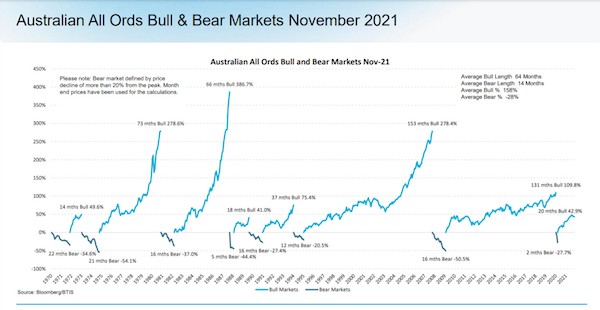
The terms ‘Bull’ market and ‘Bear’ market are always in the news and most know what they
mean, though a brief definition is noted below. The point of this chart is to allow us to see
more detail on Bull and Bear periods in regard to the Australian All Ords since 1970. A
quick snapshot, but interesting.
What is a bull market?
A market is referred to as a ‘bull’ market when the share market is showing confidence. It is
essentially a market in which share prices continue to rise, encouraging buying. After a
sustained period of increasing share prices, investors gain faith that the uptrend will continue
in the long-term. In a typical bull-market, the country’s economy is strong and
unemployment is low.
A market may be called a bull market after a number of ‘bullish’ days in succession, but the
technical criteria for a bull market is a rise in the value of the market by 20%.
What is a bear market?
‘Bear’ markets are the opposite of bull markets, and while there’s no hard and fast rule, the
generally-accepted definition is that they occur when the markets fall by more than 20%. In
bear markets, the prices of securities are falling, and widespread pessimism among investors
caused by the falling prices leads to self-sustaining negative sentiment.
Latest eNewsletters
Hot Issues
- Key tax changes and measures from the 2026 Federal Budget
- Federal budget 2026: Winners and losers
- A breakdown of 2026-27 Federal Budget Themes and Papers.
- SMSF commercial property owners and Div 296 ‘misconceptions’
- 7 simple steps to get on the investment ladder
- Can I access my super early?
- Magnificent Seven: More diverse than they may appear
- Look for the red flags that signal unscrupulous advice
- Carer responsibilities don’t meet interdependency criteria: PBR
- LRBA stability has been understated
- From Bricks to iPhones: The Evolution of the Telephone
- Interest rates likely to stay higher for longer
- Iran conflict: Keeping perspective on market risk
- Most Valuable Industries in the World 2026
- In turbulent times, stick to your long-term wealth strategy
- SMSF trustees acting badly – further disqualification cases
- Know the difference between death benefit pension and normal pension or pay the price
- View Division 296 as two-stage event
- Rise in SMSF inflows indicate more people are moving into the sector
- Super versus trusts: What is the best option with Div 296?
- Thinking of establishing an SMSF? Don’t skip reading the rules
- Investment and economic outlook, February 2026
- Coercive control in SMSF becoming a hot issue
- Are downsizer contributions losing steam?
- What to look for when choosing a financial adviser
- AI use needed with proper safeguards
- Most Reliable Car Brands in 2026
- ASIC targeting high-pressure sales and inappropriate advice
Article archive